
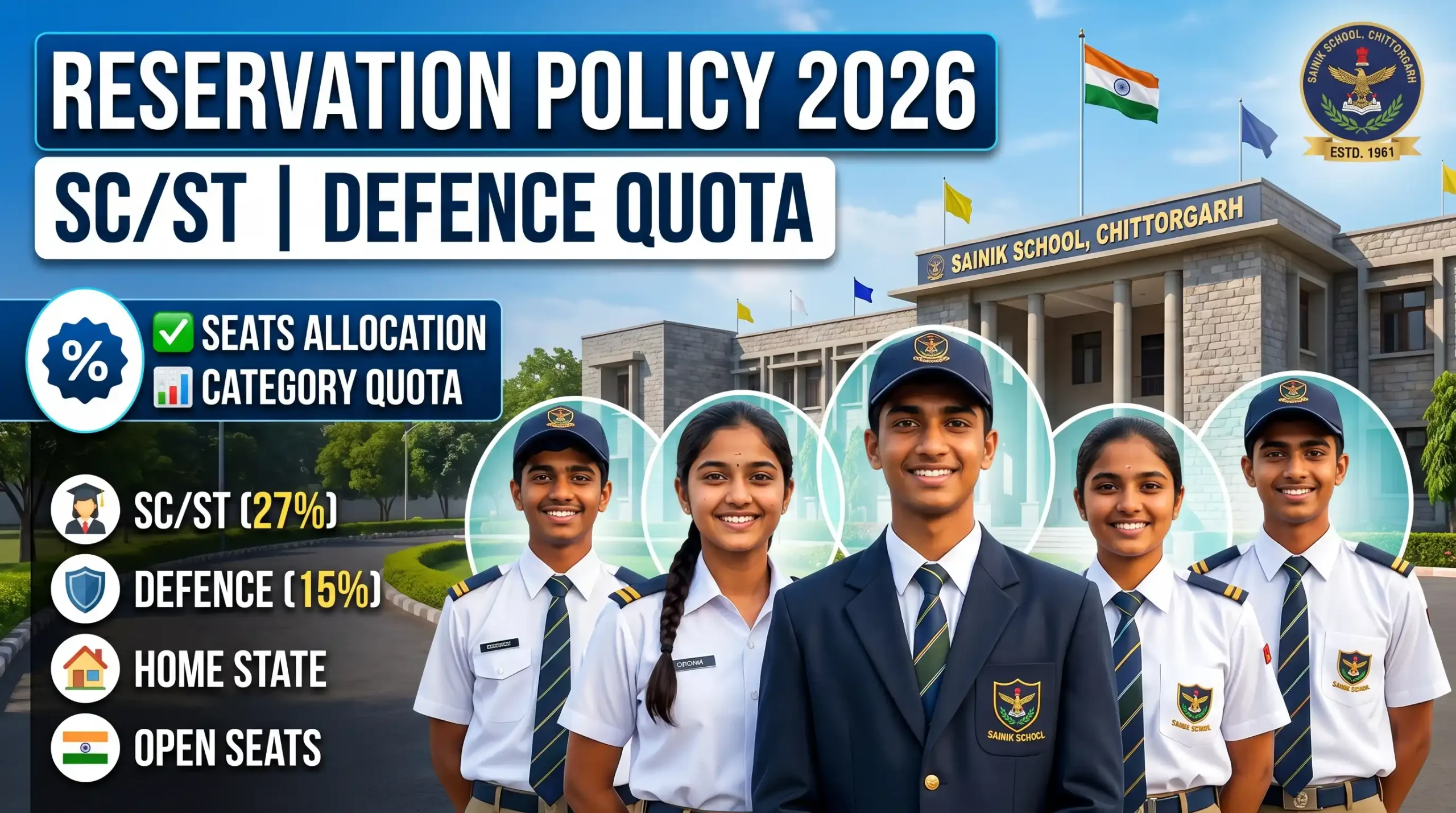
Understanding the Sainik School reservation policy is crucial for students and parents preparing for admission. It not only affects selection chances but also ensures equal opportunities for students from different backgrounds.
The real purpose of this policy is to promote inclusivity while maintaining merit-based selection.
In this guide, you’ll get a complete breakdown of Sainik School reservation policy 2026, including SC/ST quota, defence quota benefits, and state domicile rules, along with how the LWS Junior App can help in preparation.
Overview of Sainik School Reservation Policy
Sainik Schools follow a structured reservation system to ensure fair representation across categories.
Main Categories Covered:
- SC (Scheduled Castes)
- ST (Scheduled Tribes)
- Defence Personnel Wards
- State Domicile Candidates
SC/ST Reservation
Sainik Schools reserve seats for SC and ST candidates to promote equal access to quality education.
- SC: Approximately 15% seats
- ST: Approximately 7.5% seats
This ensures that students from all sections of society get opportunities.
Defence Quota (Children of Armed Forces Personnel)
A significant number of seats are reserved for wards of defence personnel.
- Priority to serving personnel
- Also includes ex-servicemen wards
This supports families dedicated to national service.
State Domicile Quota
Each Sainik School reserves a large percentage of seats for students belonging to the state where the school is located.
- Around 67% seats for state candidates
- Remaining seats for other states
This ensures regional representation and accessibility.
Other Important Points
- Girls are now allowed admission in many Sainik Schools
- Reservation policies may slightly vary by school
- Final selection is still based on AISSEE merit
How Reservation Affects Selection
Reservation provides an advantage but does not eliminate competition.
- Students must still clear AISSEE
- Higher scores improve chances within category
- Preparation remains the key factor
Preparation Strategy for AISSEE
1. Mathematics
- Focus on NCERT basics
- Practice daily
2. Reasoning
- Solve puzzles and patterns
- Improve logical thinking
3. Language
- Read daily
- Improve grammar and vocabulary
Daily Study Plan
- Mathematics → 1.5 hours
- Reasoning → 1 hour
- Language → 45 minutes
- Mock Test / Revision → 1 hour
Total: 3–4 hours daily is enough.
Smart Preparation with LWS Junior App
Understanding reservation is important—but preparation is what truly decides success.
The LWS Junior App provides a structured platform for AISSEE preparation.
Key Benefits:
📺 Live classes
🎥 Recorded lectures
📝 Daily practice questions
📊 Performance tracking
🎯 Mock tests
Students can follow a clear and guided preparation strategy.
Common Mistakes to Avoid
❌ Relying only on reservation benefits
❌ Ignoring exam preparation
❌ Lack of consistency
❌ Not attempting mock tests
Remember: Preparation matters more than category.
Final Thoughts
- Reservation ensures equal opportunity
- Merit still plays a key role
- Preparation is the ultimate deciding factor
With the right strategy and effort, any student can secure admission in a Sainik School.
FAQs (SEO Boost)
Q1. What is SC/ST reservation in Sainik Schools?
SC gets around 15% and ST around 7.5% seats.
Q2. What is defence quota?
It is reserved for children of defence personnel.
Q3. What is state domicile quota?
Around 67% seats are reserved for students of the respective state.
Q4. Can I get admission with low marks due to reservation?
No, you still need to qualify based on merit within your category.