
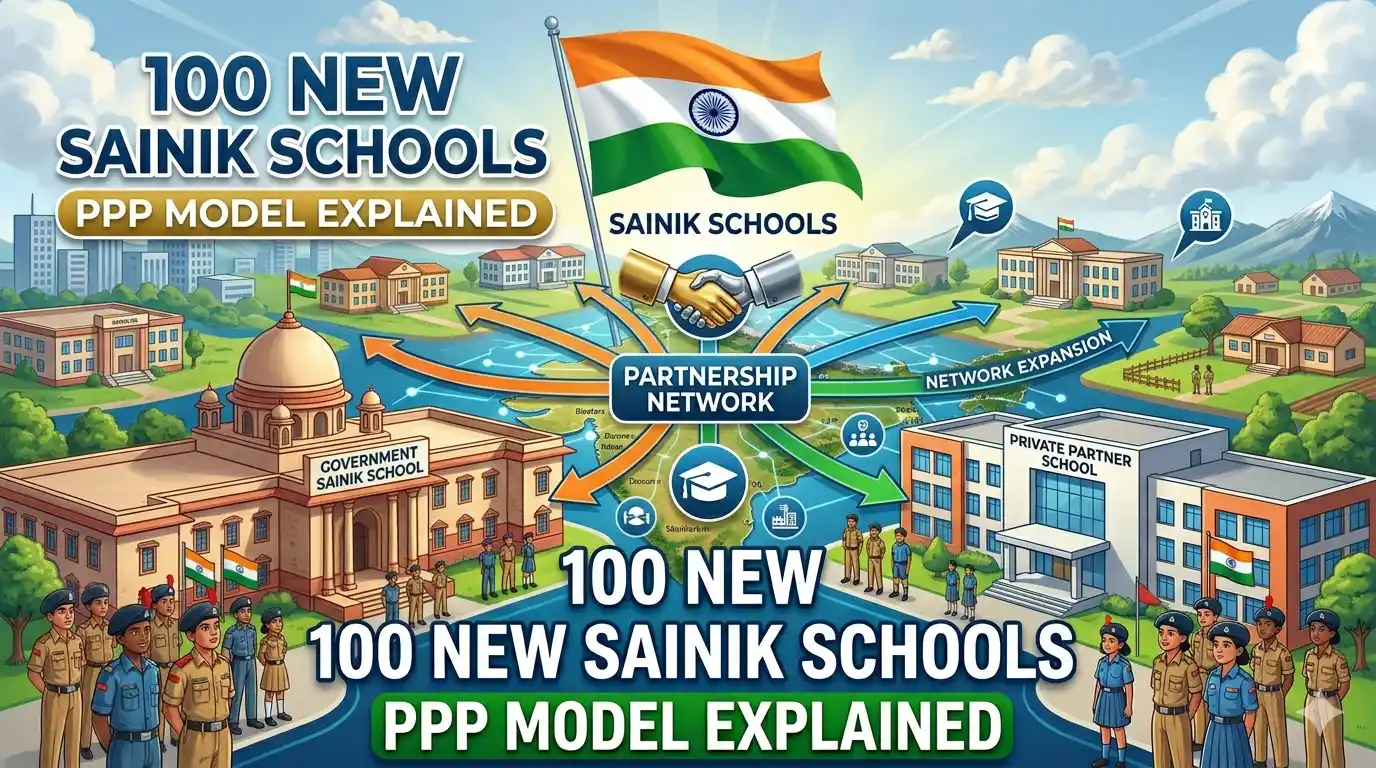
The Government of India is taking a major step towards strengthening defence education by introducing PPP Model Sainik Schools.
This initiative aims to expand access to military-style education across the country, giving more students the opportunity to prepare for NDA and defence careers.
In this guide, you’ll understand the PPP model Sainik Schools, their purpose, benefits, and future impact, along with how the LWS Junior App helps students prepare for entry.
What is the PPP Model in Sainik Schools?
PPP (Public-Private Partnership) model allows private schools, NGOs, and institutions to collaborate with the government to run Sainik Schools.
- Government provides guidelines and standards
- Private partners manage infrastructure and operations
- Maintains Sainik School values and discipline
This model ensures rapid expansion without compromising quality.
Why PPP Model Was Introduced
The need for expansion arose due to increasing demand for defence education.
- Limited number of existing Sainik Schools
- High competition for seats
- Growing interest in NDA careers
The PPP model aims to bridge this gap.
100 New Sainik Schools Initiative
Under this initiative, the government plans to establish 100 new Sainik Schools across India.
- Schools in both rural and urban areas
- Better accessibility for students
- Increased opportunities nationwide
This will significantly expand defence education reach.
Key Features of PPP Sainik Schools
- CBSE-based curriculum with defence orientation
- Focus on discipline and leadership
- Preparation for NDA and SSB
- Modern infrastructure and facilities
Students receive holistic development training.
Benefits for Students
- More seats and reduced competition pressure
- Access to quality defence education
- Opportunities in different regions
This makes military education more inclusive.
Impact on NDA & Defence Services
The PPP model will strengthen the pipeline of NDA aspirants.
- More trained candidates
- Better preparation at school level
- Higher success rates in NDA
This initiative supports the long-term needs of the Armed Forces.
Challenges & Considerations
While the model is promising, some challenges exist:
❌ Maintaining uniform quality
❌ Ensuring proper discipline standards
❌ Monitoring private institutions
However, strict guidelines help maintain standards.
Preparation Strategy for AISSEE
1. Mathematics
- Focus on basics
- Practice daily
2. Reasoning
- Solve puzzles
- Improve logical thinking
3. Language
- Read daily
- Improve grammar
Daily Study Plan
- Mathematics → 1.5 hours
- Reasoning → 1 hour
- Language → 45 minutes
- Mock Test / Revision → 1 hour
Total: 3–4 hours daily is sufficient.
Smart Preparation with LWS Junior App
To take advantage of these new opportunities, students must clear the entrance exam.
The LWS Junior App provides a structured preparation system.
Key Benefits:
📺 Live classes
🎥 Recorded lectures
📝 Daily practice questions
📊 Performance tracking
🎯 Mock tests
Students can prepare with a clear roadmap and disciplined approach.
Common Mistakes to Avoid
❌ Waiting for new schools instead of preparing
❌ Lack of consistency
❌ Ignoring basics
❌ Not attempting mock tests
Preparation should start early.
Final Thoughts
- PPP model expands Sainik Schools nationwide
- More opportunities for students
- Strengthens defence education system
With the right preparation, students can benefit from this expansion and build a strong defence career.
FAQs (SEO Boost)
Q1. What is PPP model in Sainik Schools?
A collaboration between government and private institutions.
Q2. How many new Sainik Schools will be opened?
Around 100 new schools.
Q3. Are PPP Sainik Schools different?
They follow similar standards with modern infrastructure.
Q4. How to get admission?
Through AISSEE entrance exam.